
Why do we avoid talking about death?
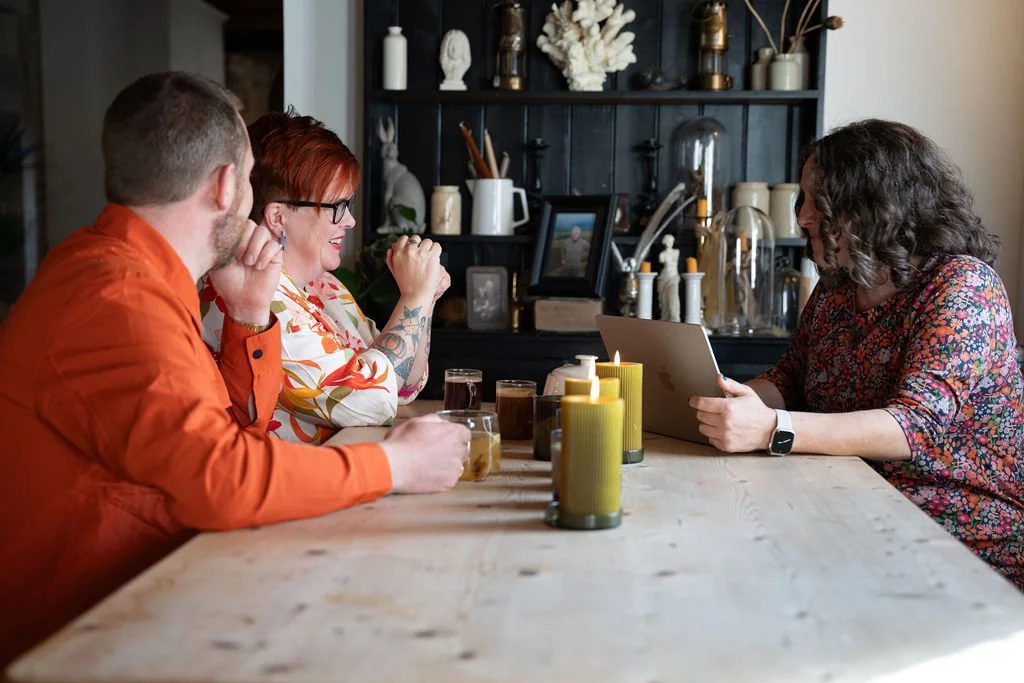
Image taken by Sarah Johnson Photography at the Dead Good Modern Funerals photo shoot
Talking about death is one of the most positive, oddly life-affirming things we can do, and expressing what we want to happen at the end of our life is a practical act of love towards the people we leave behind.
So why do so few of us actually do it? What is it that is stopping us?
Back on a bright, sunny Spring morning in 2020, I got an email from Matt, who had found my details on the Humanists UK Find A Celebrant map. He was looking for a local funeral celebrant, and wondered if I could help. Thinking he was asking for one of his parents, I read on. What I saw next stopped me in my tracks. He wasn’t asking for his mum or his dad… he was asking for himself.
Still only in his late thirties, Matt had been living with cancer since his twenties, during which time he had married, had three children, travelled the world… and had a lot of fun in the process. However, he had now been told that his cancer was terminal and that he should prepare himself. I soon learned that that was fairly typical of Matt, to want to get stuff in place but also, more importantly, to make life easier for others. And that meant he wanted to talk about the end of his life - and make plans for his funeral.
We arranged to have a video call (this was early in the first lockdown) so that he and his wife could ‘meet’ me, get a feel for how I might be able to help, and ask all the questions they wanted. And they had a lot of questions. Where could we hold the funeral? How could the children be involved? Matt’s friends? Was there anything we had to make sure we did? Questions answered, we agreed to meet up in a couple of weeks for a socially distanced walk so we could talk further.
The next week I was at my local hospice for my regular chaplaincy shift. As I sat in the office scanning the list of patients I needed to see, I noticed a familiar name and my heart sank. Things had taken a turn, and Matt had been admitted for end of life care. I went straight to his room and knocked on the door.
As I opened it, Matt greeted me with the biggest smile. “I thought you might turn up soon or later,” he grinned. We chatted for a while and he talked about how much better it was being in the hospice, where his family weren’t having to care for him - but could just be with him. His pain was being managed control, but he was very, very tired, and I could see the difference in him from the last time we had talked. “Well,” he said to me. “We’d better get on with it, hadn’t we?”
Talking in the family room at the hospice
And so, over the next couple of weeks, we talked when he was able to and, with his wife, sketched out a plan for what he wanted to happen. We laughed as we played music on his phone, choosing the songs he wanted and laughing about what a grumpy sod Van Morrison was (Matt had chosen Into The Mystic as his first song). The celebration of his life was to be in the village hall. Matt had returned to live in the village where he had grown up, and the hall was where he’d gone to playgroup as a toddler (incidentally where I had gone to ballet classes, which made us smile). I met his mum and his dad, and his children too… I was able to see how they all were together, and to witness the love between them. I can honestly say, I don’t think I’ve seen a family before who have faced death with such courage, such calmness and such a fierce love for each other.
It was a real gift, to them - and also to me.
Matt died three weeks after being admitted to hospice care. His family were, as you can imagine, overwhelmed with grief at such a huge loss. But, because Matt had thought about what he wanted for his funeral, because he’d shared his plans with them, they weren’t being asked to make those decisions at such a difficult time.
The funeral was beautiful. Matt was carried into the village hall by friends and family wearing their Chelsea scarves, and his coffin was set down in the middle of a circle of chairs. Music played, his friends spoke about his life and we watched a short film made by his brother. Then we walked him through the village and up to the cemetery, chosen by Matt because his house overlooked it, which meant that his children would be easily able to visit whenever they wanted. And, as we lowered his coffin, friends and family each scattered a single daffodil, with a personal message attached, into the grave.
It was incredibly moving.
Not only because it was a wonderful celebration of Matt’s life, but because it was a final gift from him to the people he loved. Knowing that this was what he wanted made a difficult day just that little bit lighter.
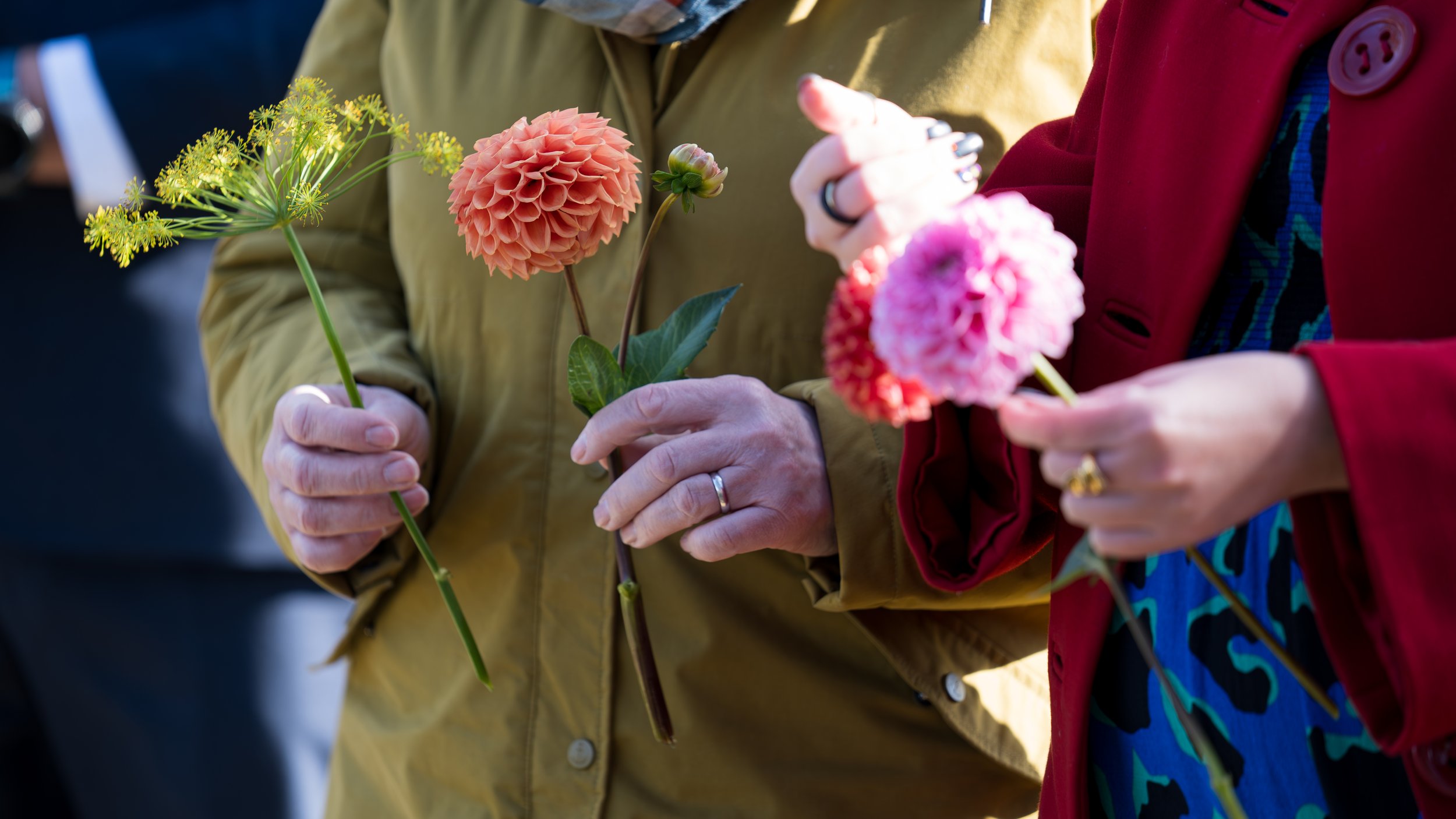
Image taken by Sarah Johnson Photography at the Dead Good Modern Funerals photo shoot
And that is exactly why we need to talk more about death, and about our end of life wishes. It makes all the difference in the world. It means we aren’t left guessing whether we’re doing the right thing, because we know we are.
Whenever I go to meet a new family to talk about a funeral, one of the first questions I will ask is “Did they ever talk to you about what they wanted?” More often than not, the answer is no. People still aren’t talking about this stuff. The most recent State of Dying report notes that only 40% of people made any plans at all for their funeral (which often is little more than paying for a plan with a funeral director and specifying cremation or burial). More worrying still, only 46% of people have discussed their wishes. At a rough guess, I’d say fewer than 25% of the almost 600 people whose lives I’ve helped celebrate have talked about their funeral wishes.
But, when they have… well, it can completely reshape the experience for their family and friends.
Like Matt said in the ‘goodbye’ video he recorded a couple of days before he died, “Life’s hard enough already, we need to share the burden. And that goes for all of us. The more we can share, the more we can love, the better.”
This blog has been published in collaboration with Kimberley Jones, a Wales based humanist funeral celebrant